
Can more precise functional brain mapping after surgery make radiosurgery for brain metastases safer? The interdisciplinary research project MENTOR is investigating how motor-eloquent brain tissue can be spared in a more targeted manner.
Funding from Swiss Cancer Research
The Inselspital has received funding from Cancer Research Switzerland for the interdisciplinary research project MENTOR. The project, entitled «MENTOR: Motor Eloquent Navigated Transcranial Magnetic Stimulation for Radiosurgery Planning in Brain Metastasis», will receive CHF 59,700 in funding over two years.
What is the goal?
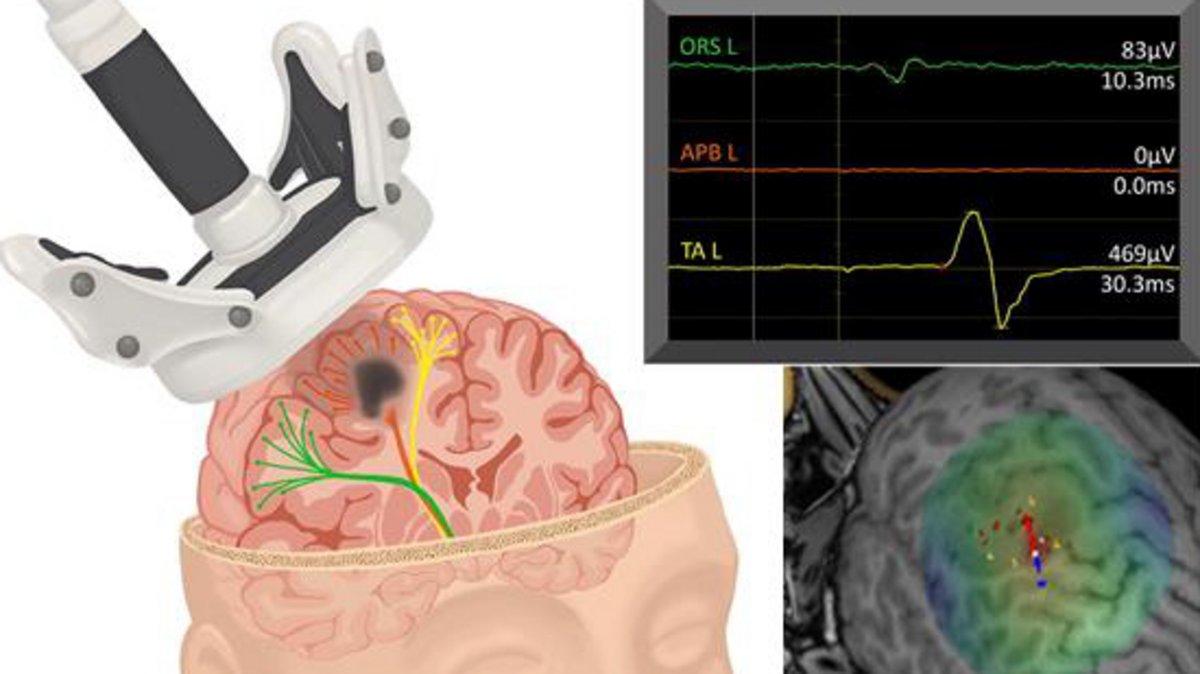
The goal of MENTOR is to improve the planning of postoperative stereotactic radiosurgery for patients with brain metastases. The focus is on protecting motor-eloquent brain areas—i.e., those regions that are crucial for motor functions. Damage to this tissue caused by radiation can lead to permanent neurological deficits.
The project in detail
The research team led by Prof. Kathleen Seidel (neurosurgery), Dr. Katharina Lutz (neurosurgery), and Dr. Ekin Ermis (radio-oncology) is investigating whether postoperative mapping of the motor cortex using navigated transcranial magnetic stimulation (nTMS) can make radiosurgical planning more precise. In contrast to the preoperative functional maps used to date, this approach takes into account the anatomical changes following tumor surgery. The individual functional maps obtained in this way should make it possible to specifically keep the radiation dose away from motor-relevant brain tissue without compromising the effectiveness of tumor treatment.
The project was submitted jointly and combines expertise in neurosurgery, neurophysiology, and radiation oncology. The team is supported by Dr. Jonathan Wermelinger in study planning, data analysis, and evaluation.