
A long-term study by Inselspital and the University of Bern shows that, despite initially good recovery, patients who have undergone surgery for a chronic subdural hematoma continue to have an elevated mortality rate even years later. After ten years, 55.5 percent of those who underwent surgery were still alive, compared to 73.5 percent of the general Swiss population. In addition, many long-term survivors report persistent limitations in cognitive and daily-living functions.
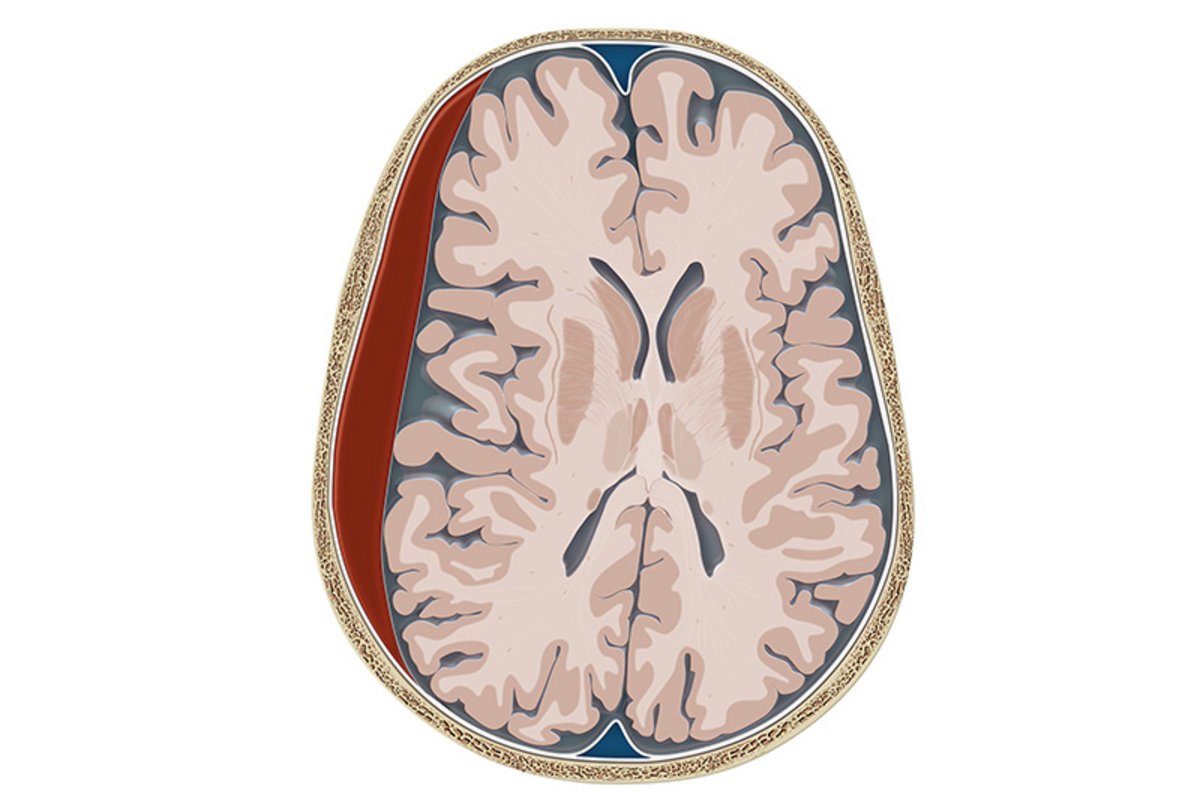
A fall or a minor head injury can lead to a chronic accumulation of blood between the brain and the skull. This condition is known as a «chronic subdural hematoma» and is one of the most common neurosurgical conditions among older adults. In recent decades, the incidence of this condition has increased significantly. With an aging population and the increasing use of blood-thinning medications, this trend is likely to continue.
Long-term consequences have received little attention so far
Surgical treatment of a chronic subdural hematoma typically involves a brief and relatively simple procedure to relieve pressure. The surgery is usually very effective and safe, and the majority of patients initially recover well. However, a new long-term study by the Department of Neurosurgery at Inselspital, Bern University Hospital, now shows that this condition has implications far beyond acute treatment. The researchers examined 359 patients who had undergone surgery between 2012 and 2016 and tracked their health outcomes over approximately ten years. They compared the results with data from the general Swiss population.
It was found that mortality in the patient group remained elevated throughout the entire observation period. Ten years after surgery, 55.5 percent of those affected were still alive, compared to 73.5 percent in the corresponding general population. Survival rates are thus significantly lower than those of the general population, underscoring the clinical relevance. «Our results show that chronic subdural hematoma may be associated with a long-term increased health risk beyond acute treatment,» says PD Dr. Johannes Goldberg, last author of the study and attending physician at the Department of Neurosurgery at Inselspital.
Limitations despite an overall maintained quality of life
In addition to mortality, the researchers also examined the health-related quality of life of long-term survivors. The results painted a mixed picture: Overall, global quality of life was comparable to age- and sex-weighted European reference values. At the same time, however, many patients reported persistent impairments in cognitive functions such as memory and concentration, as well as difficulties in performing daily tasks independently and participating in social life. Such impairments are not always systematically recorded in clinical practice, yet they can significantly impact daily life.
«Even though many patients recover well initially, there are often long-term limitations in key areas of quality of life that remain noticeable in daily life—a circumstance that has never been investigated before and was therefore unknown,» explains Dr. Thomas Petutschnigg, lead author of the study and resident at the Department of Neurosurgery.
More than just a surgical problem
The results suggest that chronic subdural hematoma is more than just a short-term neurosurgical problem; rather, it may be a marker of overall increased health vulnerability—due, for example, to age, comorbidities, or an increased risk of falls. For clinical practice, this means that treatment does not end with surgery. Rather, long-term, interdisciplinary care involving primary care physicians is crucial. «These patients require long-term, interdisciplinary support,» adds Johannes Goldberg. «Structured follow-up care can help identify risks early on and preserve independence for as long as possible.»
With an aging population, the number of people affected is likely to continue rising in the coming years. The study provides important insights into how care for these patients should be further developed in the future. In addition to surgical treatment, rehabilitative and preventive approaches are becoming particularly important in order to reduce long-term limitations and maintain quality of life for as long as possible.
Publication
Petutschnigg T. et al. Long-Term Mortality, Cognition, and Quality of Life After Chronic Subdural Hematoma Surgery. JAMA Neurology, 2026. Online ahead of print.
Doi: 10.1001/jamaneurol.2026.0656
Experts
PD Dr. Johannes Goldberg, Senior attending physician, Department of Neurosurgery, Inselspital, Bern University Hospital and the University of Bern
Dr. Thomas Petutschnigg, Resident, Department of Neurosurgery, Inselspital, Bern University Hospital and the University of Bern
Prof. Dr. Philippe Schucht, Professor and Deputy Chief Physician, Head of Neurooncology, Department of Neurosurgery, Inselspital, Bern University Hospital and the University of Bern
Prof. Dr. Andreas Raabe, Professor, Director and Chief Physician, Department of Neurosurgery, Inselspital, Bern University Hospital and the University of Bern