
Spinal lipomas are accumulations of fatty tissue in the spine, most commonly in the lumbar region. They are a congenital developmental disorder. A spinal lipoma can put pressure on the spinal cord or adhere to it, thereby causing neurological problems. An early diagnosis by a specialist is crucial to ensuring appropriate medical treatment. If a spinal lipoma is suspected, parents should seek professional medical help immediately.

How common are spinal lipomas in children?
Spinal lipomas occur in about one in 4,000 newborns, making them a rare condition overall. However, they are among the most common congenital malformations of the spine *.
What causes a spinal lipoma?
Spinal lipomas develop due to a developmental abnormality of the spinal cord during neurulation. This is the process by which the neural tube forms during an early stage of embryonic development. The brain and spinal cord later develop from this structure.
What are the symptoms of a spinal lipoma?
The lipoma causes the spinal cord to become adherent and can thus lead to spinal cord damage and impaired nerve function. As the child grows, additional tension may be placed on the spinal cord, which—due to the adhesion—cannot grow along with the spine.
The symptoms of spinal lipomas can vary from child to child. They range from asymptomatic cases to severe deficits. Common signs include *, *:
- Back pain
- Leg and/or foot problems
- Numbness
- Weakness and/or difficulty walking
- Orthopedic abnormalities
- Bladder and/or bowel problems
How is a spinal lipoma diagnosed?
The first step is a comprehensive neurological examination. The definitive diagnosis of spinal lipomas in children is made using imaging techniques. Often, due to abnormalities in the skin and fatty tissue on the back, an ultrasound is performed shortly after birth, which provides initial clues. The definitive diagnosis is made using magnetic resonance imaging (MRI). These examinations allow doctors to determine the exact location and size of the lipoma, as well as its effects on the spinal cord.
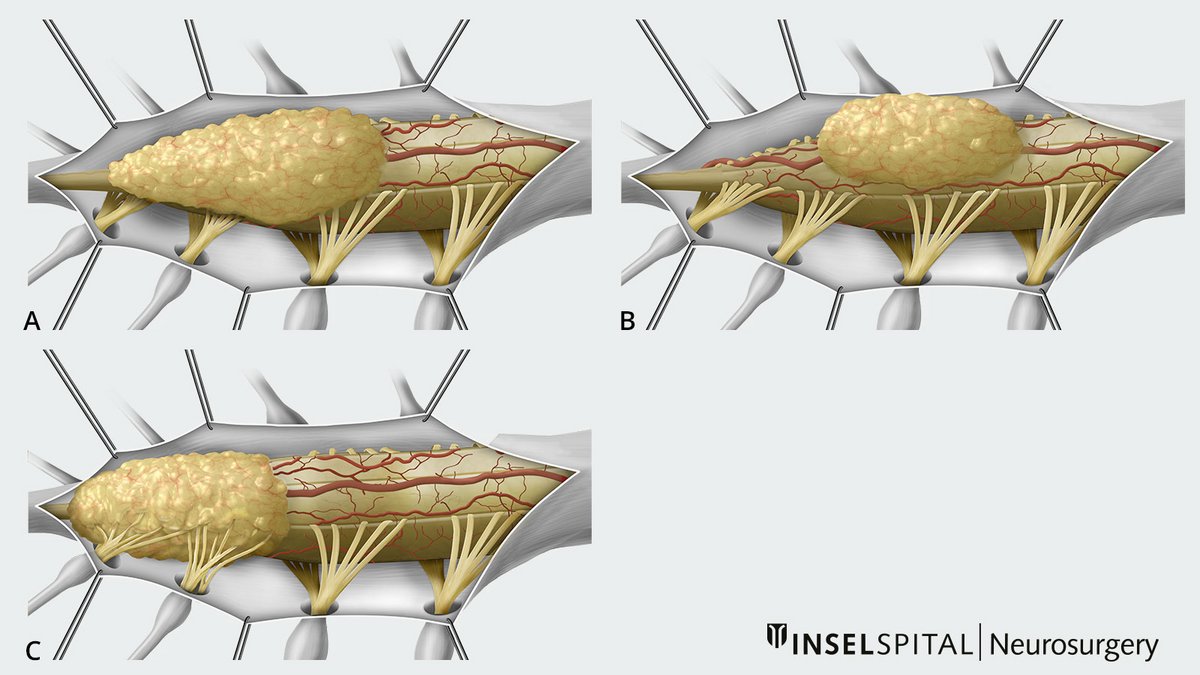
Lipomas are classified into different types based on embryological and/or surgical aspects *. A commonly used classification system categorizes lipomas according to their location and the cause of their formation during embryonic development *.
The extent and location of a lipoma influence the choice of treatment.
The degree of difficulty involved in the surgical removal of a spinal lipoma can vary greatly *.
In addition, tests are performed to assess bladder function and neurological function, as well as an orthopedic evaluation.
Early diagnosis is of great importance, as it enables doctors to carefully plan treatment and prevent potential complications during the procedure as well as long-term consequences.
What does treatment involve?
The treatment of spinal lipomas in children requires the collaboration of an interdisciplinary team comprising specialists in
- pediatric neurology
- pediatric neurosurgery
- pediatric surgery
- pediatric urology
- pediatric orthopedics
- physical therapy
Conservative Therapy
If conservative treatment is determined to be the appropriate therapeutic option, it requires regular checkups, monitoring of functions, and long-term follow-up care by the interdisciplinary team.
Surgery
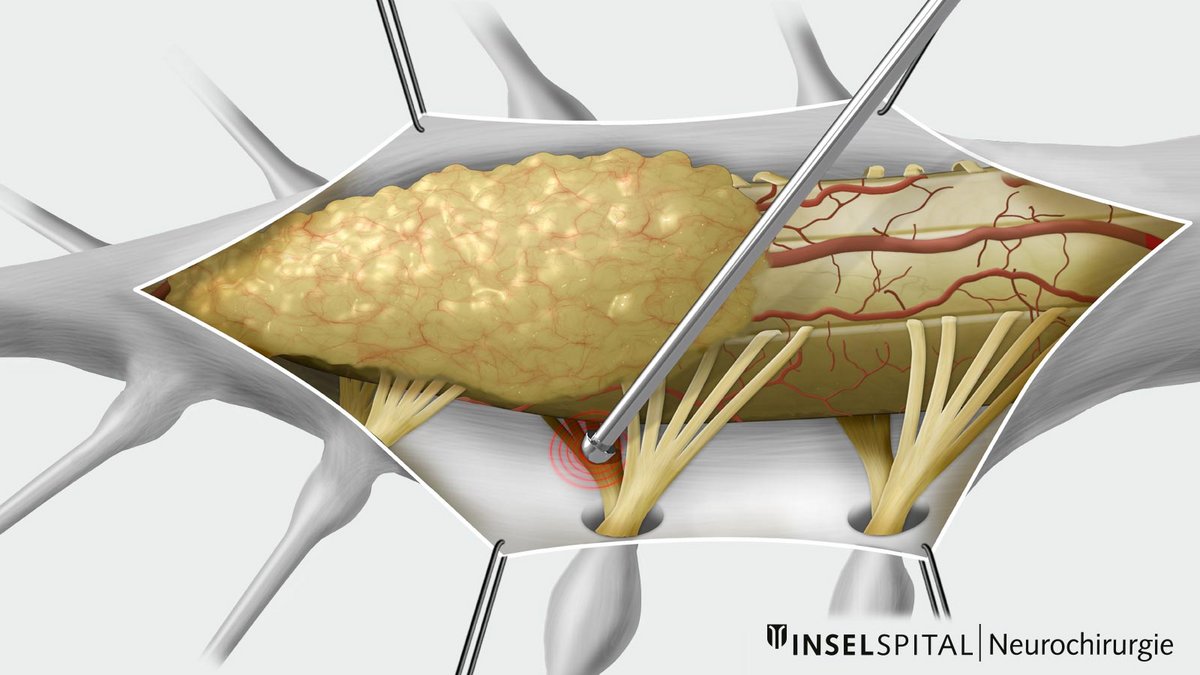
If surgery is the treatment of choice, the indication is determined jointly. The primary goal of the surgical procedure is, if possible, the detachment and complete removal of the lipoma *and, thereby, the relief of pressure on the spinal cord within the spinal canal. This is intended to prevent further damage. The optimal timing of surgery depends on the symptoms and the type of lipoma and must be determined on a case-by-case basis *, *.
The surgery is performed with the utmost safety for the child, aiming to remove as much of the lipoma as possible without compromising important neurological functions. Modern surgical techniques are used to provide the best possible protection for the spinal cord and nerve roots. In particular, intraoperative neurophysiological monitoring (IOM) assists surgeons in identifying and protecting important structures. *
Follow-up Care
Follow-up care for children who have undergone surgery and those who have not includes regular clinical checkups and monitoring of functional progress, particularly bladder function and neurological functions. These checkups are coordinated and conducted by the interdisciplinary treatment team. The involvement of the children’s primary care physicians and therapists is also crucial to ensuring the best possible care and rehabilitation.
Prognosis
The exact course of treatment for a lipoma—and thus the prognosis—varies from case to case, depending on its size, location, and impact on the surrounding tissue. The prognosis following surgery depends heavily on the extent to which the spinal cord and nerve roots had already been damaged by the lipoma prior to the procedure.
-
Morota N, Ihara S, Ogiwara H. New classification of spinal lipomas based on embryonic stage. J Neurosurg Pediatr. 2017 Apr;19(4):428-439. doi: 10.3171/2016.10.
-
Xenos C, Sgouros S, Walsh R, Hockley A. Spinal lipomas in children. Pediatr Neurosurg. 2000 Jun;32(6):295-307. doi: 10.1159/000028958.
-
De Vloo P, Sharma J, Alderson L, Jankovic I, Tahir MZ, Desai D, Pang D, Thompson DNP. Radical resection of lumbosacral lipomas in children: the Great Ormond Street Hospital experience. Childs Nerv Syst. 2022 Jun;38(6):1113-1123. doi: 10.1007/s00381-022-05483-x.
-
Pang D. Surgical Management of Complex Spinal Cord Lipomas : A New Perspective. J Korean Neurosurg Soc. 2020 May;63(3):279-313. doi: 10.3340/jkns.2020.0024.
-
Pang D, Zovickian J, Wong ST, Hou YJ, Moes GS. Surgical treatment of complex spinal cord lipomas. Childs Nerv Syst. 2013 Sep;29(9):1485-513.
-
Pang D. Surgical management of complex spinal cord lipomas: how, why, and when to operate. A review. J Neurosurg Pediatr. 2019 May 1;23(5):537-556. doi: 10.3171/2019.2.
-
Pang D, Zovickian J, Oviedo A. Long-term outcome of total and near-total resection of spinal cord lipomas and radical reconstruction of the neural placode, part II: outcome analysis and preoperative profiling. Neurosurgery. 2010 Feb;66(2):253-72; discussion 272-3. doi: 10.1227/01.
-
Sala F. Intraoperative neurophysiology in pediatric neurosurgery: a historical perspective. Childs Nerv Syst. 2023 Oct;39(10):2929-2941. doi: 10.1007/s00381-023-06155-0.